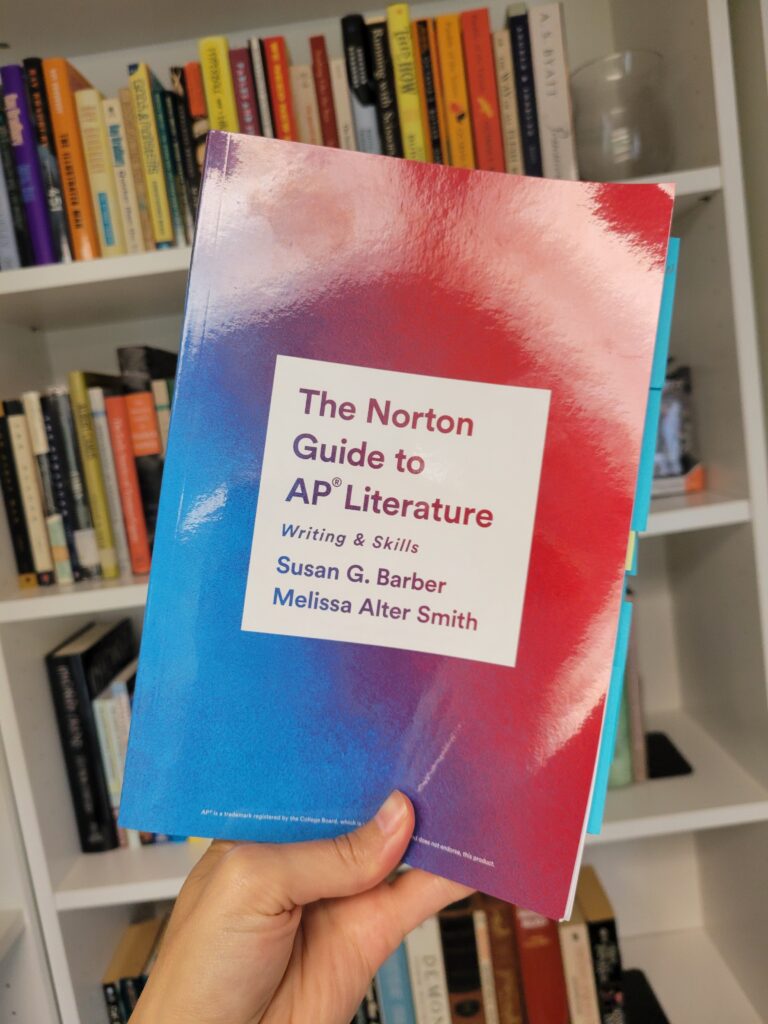
I don’t teach AP, but I wanted to read this because some of my juniors choose to take AP, and I want to make sure I’m getting them ready. I also know that the authors are pretty amazing, and I figured reading this would be extremely helpful for the classes I’m currently teaching. I was more than correct. This text is primarily for students preparing to take the exam, so the explanations of how to analyze literary texts and the examples provided are extremely clear and will serve as good models for me as I teach literary analysis and writing about texts. Also valuable was the chapter on close reading skills because my students struggle when it comes to reading and analyzing fiction and poetry. My district focuses most of our close reading requirements on nonfiction texts, and fiction and poetry require different close reading skills. I’m looking forward to revamping my literary analysis lessons with this book by my side! This will help me help my students become stronger readers and writers!
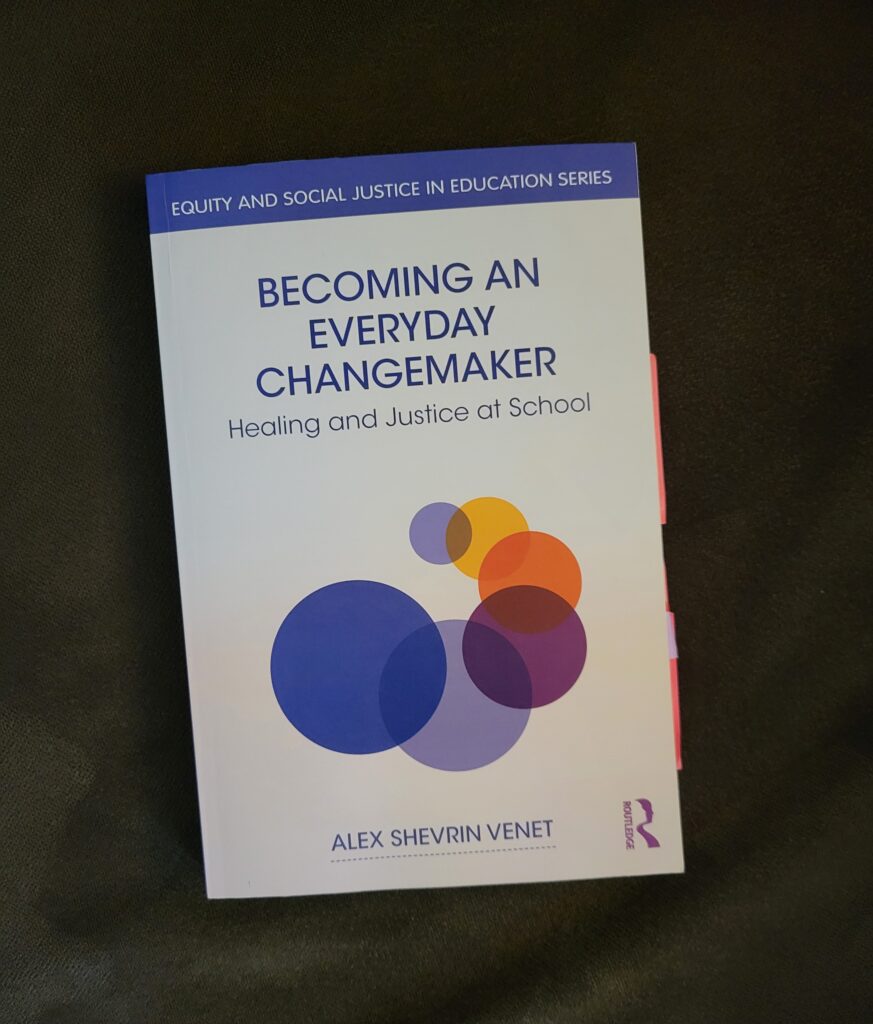
I’m so grateful for the work Alex Shevrin Venet has done and the positive impact it has had on my teaching and my life. I read and loved Equity Centered Trauma Informed Instruction, and was fortunate to be part of her Nurturing the Nurturers online space. I’m extremely aware of how trauma impacts how I move through the world, and I’ve read extensively to both understand trauma and work toward healing. In Becoming an Everyday Changemaker, Venet gives one of the best explanations of trauma I’ve ever read and provides methods for and examples of how to make positive changes in educational systems in trauma informed ways. It has always been obvious to me that my own trauma shows up in how I navigate situations in my classroom and at school in general, and now I have a deeper understanding of how I can approach those situations in ways that are healthier for myself and those around me. There are also valuable ideas I can incorporate into my teaching and classroom management, especially when I address binary thinking and introduce both/and. Most importantly, I value any text that encourages slowing down. This is something I’m working on in every aspect of my life, and I need to practice it more in my classroom. I’ll be sitting with this book as I begin to envision what I want my classroom environment to look like, and remembering what I’ve learned as I navigate a school year that’s sure to be full of changes.
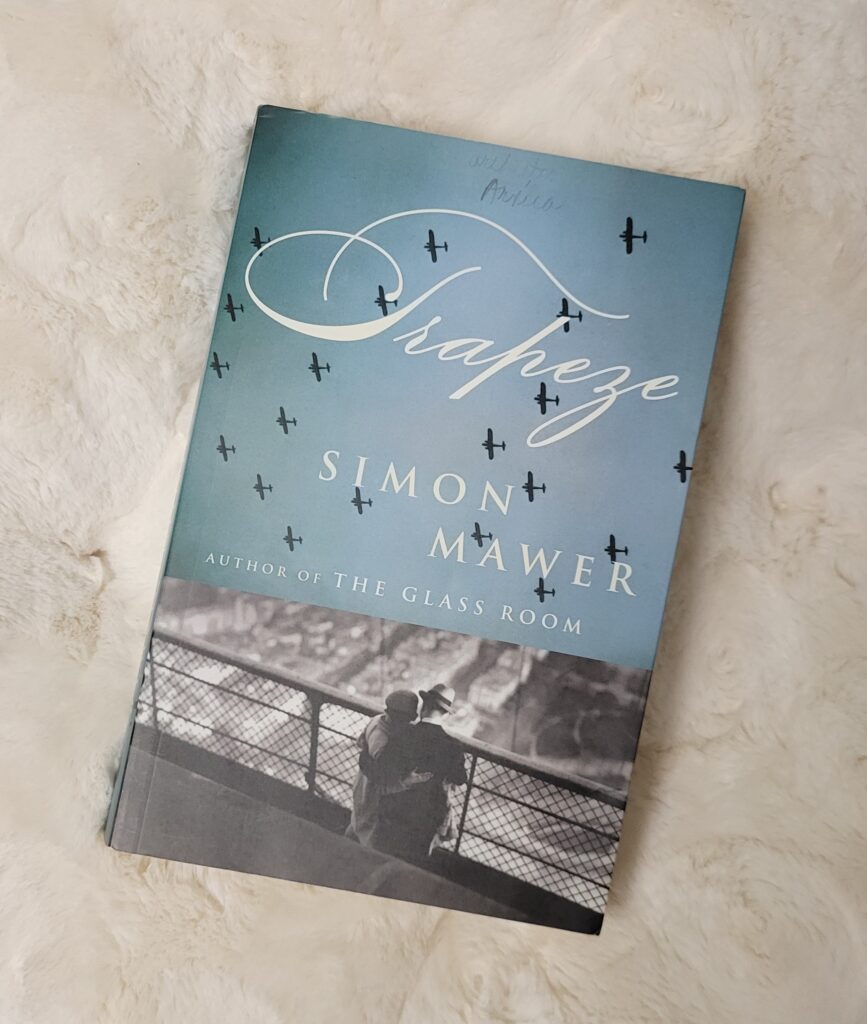
I was a little disappointed in Trapeze. Maybe I should hold off judgment and just read the sequel, since the ending is what I had a problem with, and the reviews for that are better. While I enjoy Mawer’s writing, I thought the main character, Marian, was a little flat and I found myself asking what Mawer was getting at with some of her decisions. Considering that Mawer wrote one of my favorite books ever (The Fall), I may be holding him to a ridiculously high standard.
Moving on to shelf #25!
Arthur Miller. I had him up on a pedestal until I learned more about his personal life and how he treated his son Daniel. I used to teach The Crucible, and I used Miller as an example to discuss the idea of separating the art from the artist, which I have a hard time doing. When I find out an author has done reprehensible things or made dehumanizing comments, I’m unable to put that out of mind as I’m reading, and I’ll often remove the books from my shelves so I’m not forced to think about how disappointed and/or angry I am. I’m faced with this again since one of my favorite authors has been accused of sexual assault. I take comfort in that there are so many other authors out there, and if I have to move on, I have options. It’s a lot to process.
That said, I’ll probably read The Memory Librarian by Janelle Monáe or something by Toni Morrison, even though that will put me closer to reading everything she’s written.
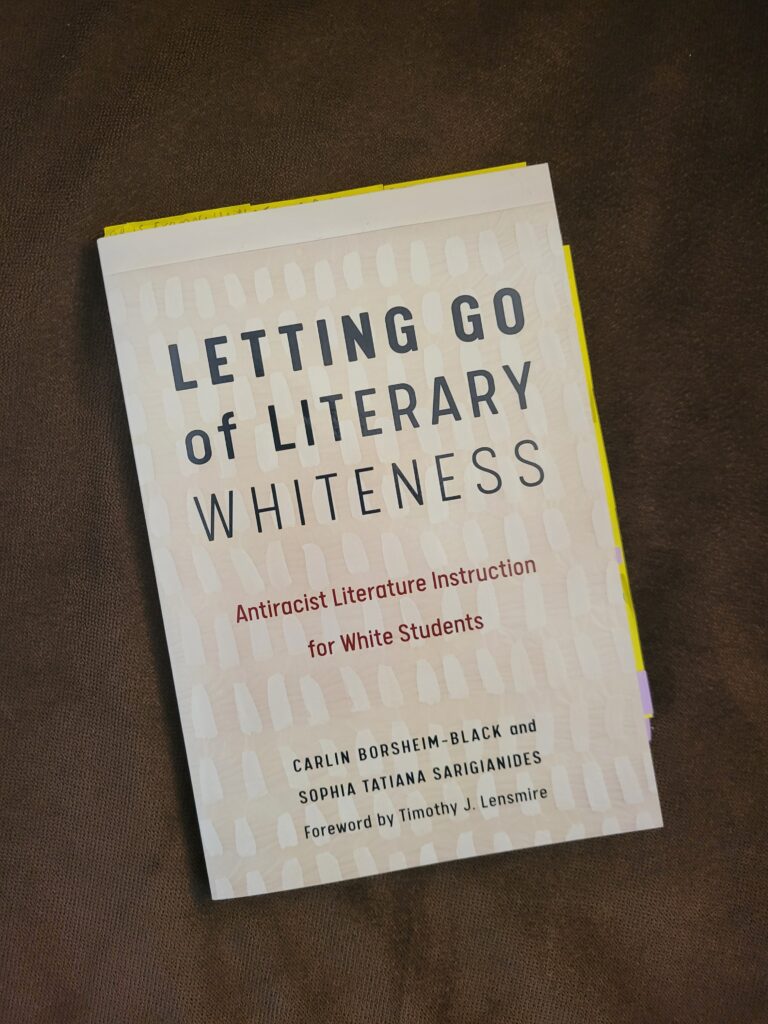
Discussions of race and racism can be unpredictable and difficult to navigate, but that doesn’t mean that we can shy away from them or shut them down. Letting Go of Literary Whiteness: Antiracist Literature Instruction for White Students by Carlin Borsheim-Black and Sophia Tatiana Sarigianides addresses the fears and concerns teachers may have and provides concrete methods for navigating discussion of race in the classroom. One of the strengths of this text is that the authors provide examples of real classroom discussions that they then unpack to see where the teacher could have navigated the situation more effectively or point out where the teacher was successful when students became heated. They also provide a framework utilizing backward design to develop units for students to increase racial literacy, because in some texts, it’s difficult to know where to start. Using commonly taught works, like A Raisin in the Sun, The Adventures of Huckleberry Finn, To Kill a Mockingbird, The Crossover, and One Crazy Summer, Borsheim-Black and Sarigianides explain how to use a Critical Race Theory lens for literary analysis, planning for discussions involving race, exposing Whiteness and White supremacy, and designing assignments to build racial literacy.
I also think it’s important to acknowledge that while this text focuses on instruction for White students, the authors also address the reality that most teachers do not have homogeneous racial groupings in their classes and that they need to think about how their curriculum and instructional choices impact BIPOC students. The authors offer concrete ways to address this, as well.
With the courses I’m teaching, I can’t shy away from discussions of race, and I wish I had read this book earlier in my career. I’ve had moments in my classroom where I’ve struggled and situations that I didn’t feel equipped to handle. While I know I’ll never be able to predict the way a discussion will go, after reading this, I feel like I have a more concrete way to plan units, analyze the texts I teach, design assignments, and prepare for discussions.
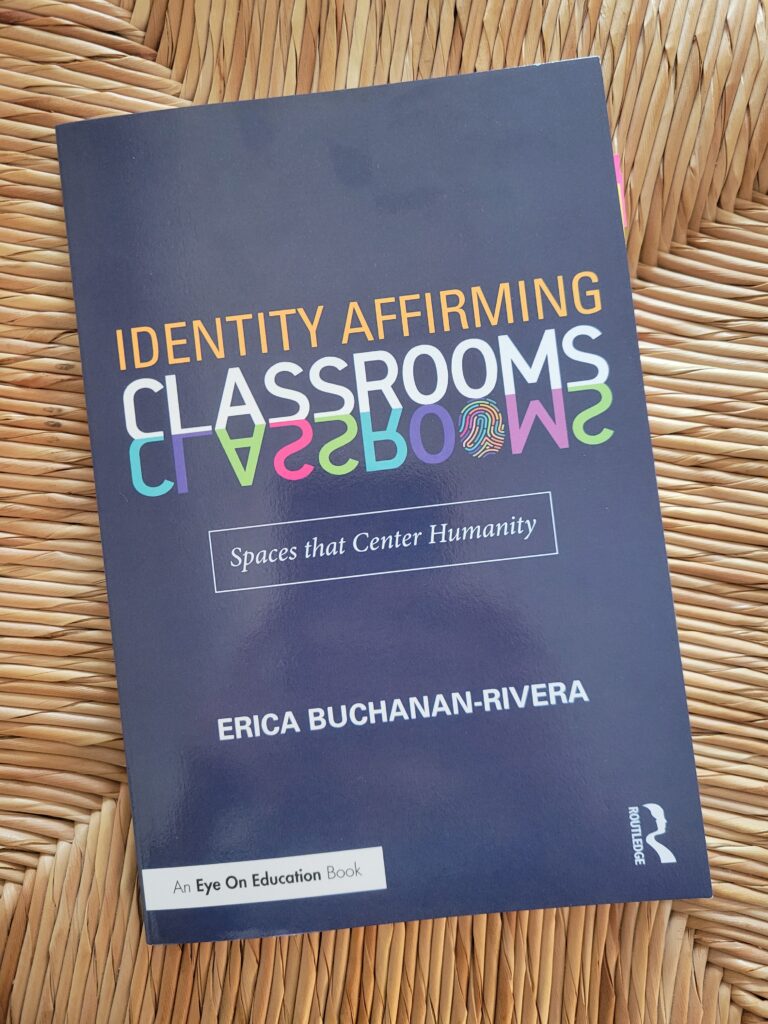
My second summer PD book was Identity Affirming Classrooms: Spaces that Center Humanity by Dr. Erica Buchanan-Rivera, which made me think critically about my classroom space. While I generally receive positive feedback from students about my classroom environment and teaching, I know there are areas where I can improve and challenges I need to overcome that may not be obvious to my students. What I learned while reading this book will help me in many ways. Dr. Buchanan-Rivera provides extensive background information on why identity affirming spaces are important and she includes concrete methods for developing them. I was especially grateful for more resources to refine and improve the materials I use when discussing identity with my students and elements to take into account when organizing my classroom’s physical space.
I wonder if some of the issues I had with classroom discussion and student engagement could stem from the physical arrangement of my room. I need to figure out creative ways to incorporate conferencing with students and carve out time for community building. This book reminded me how important those things are. My biggest barrier is the combination of large classes and forty minute class periods. When I had smaller classes, conferences and community building were much easier, but I can’t allow them to fall by the wayside just because I sometimes have almost thirty students in my room.
This is another text I would highly recommend to any teacher regardless of the subject or grade level. We all need to design spaces where students feel valued and safe, and Dr. Buchanan-Rivera addresses every element we need to consider including physical space, classroom materials, and ensuring students feel safe, valued, and supported.
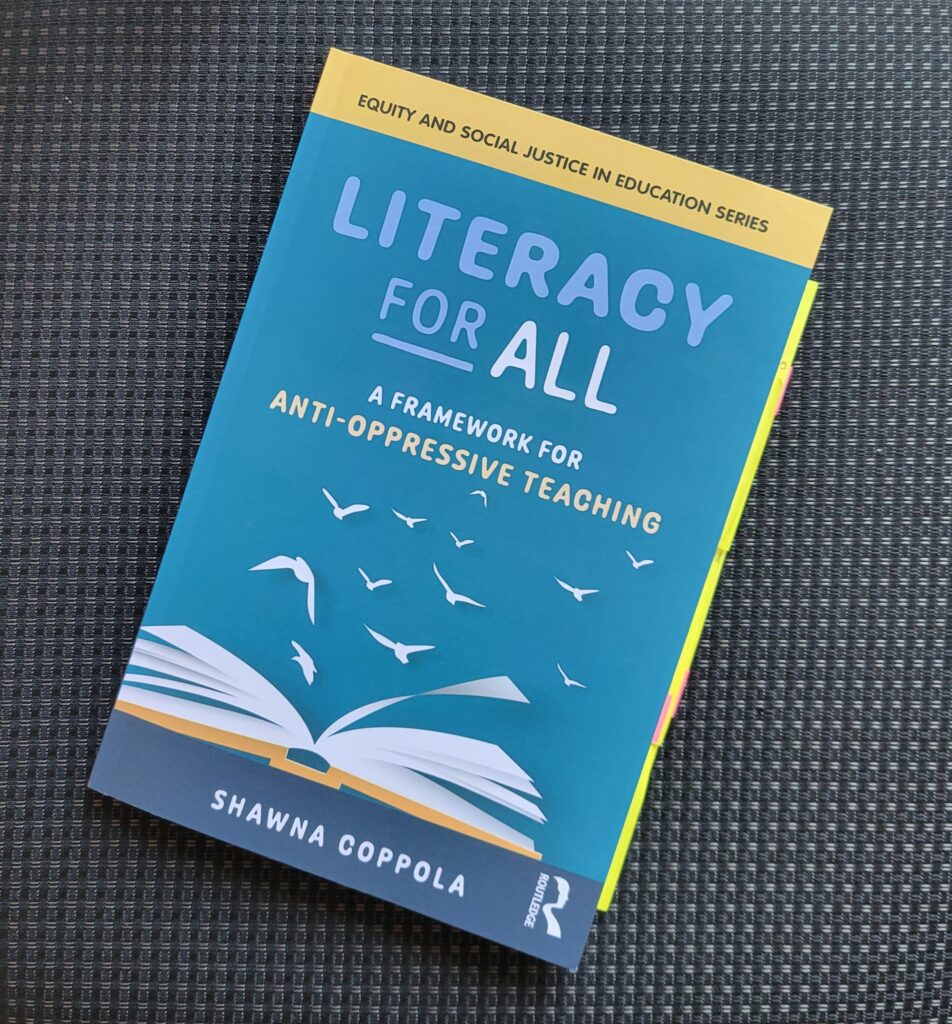
My mind works best in the early morning, so an important part of my summer routine is morning reading, planning, and writing. I usually start off by reading a chapter in a professional development text and then think about what I can incorporate into my plans for the next year. Sometimes this leads to bursts of creative lesson planning genius, like this morning as I was finishing Literacy for All: A Framework for Anti-Oppressive Teaching, by Shawna Coppola. While the entire text was beneficial to me, a few ideas provided serious nudges. I found myself completely revamping the way I approach identity and identity webs, thinking about how and where I can incorporate multimodality, and asking myself how I can conceptualize literacy as both a tool for liberation and for oppression. I’ve been working on updating my unit on Things Fall Apart, so the timing of reading this book was perfect. One thing I loved about this Literacy for All was how Coppola cited works that I know well, but made me think about them and how I can apply the knowledge contained within them in new ways. And then there were all the new resources combined with Coppola’s own experience and wisdom that made me want to learn more and continue to revise my units and lessons.
This book set the bar extremely high for my summer professional reading, and I HIGHLY recommend it for any educator.
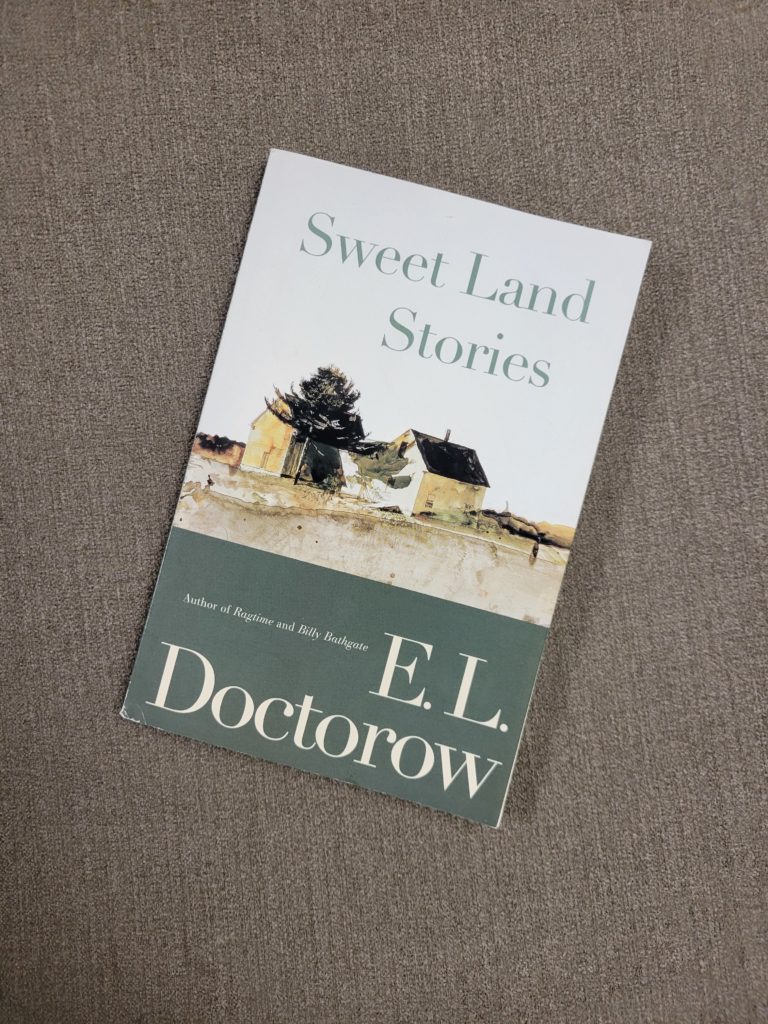
I know I said I was going to read slowly and deliberately, but Sweet Land Stories was an extremely fast read. I’m not quite sure how to describe this collection, but it wasn’t at all what I expected. Each of the stories was pretty disturbing and tackled various types of moral ambiguity. What tied them all together was the question of why people go along with things that are not in their best interests or in many cases reprehensible. And why do so many people make excuses for those who do horrible things? My favorite story was “Walter John Harmon,” which was about a religious cult led by a con artist. The members of the cult refused to see the truth and found ways to continue to venerate Walter John Harmon even after his betrayal was clear. This collection was published in 2004, but there were so many parallels to what is going on today. I’ll be thinking about this for a while.
Reading this satisfied two challenge categories: “Sweet or Spicy” and “read a book based solely on the title.” They fit together nicely. It would have also worked for “door on the cover,” but I have other books that will satisfy that.
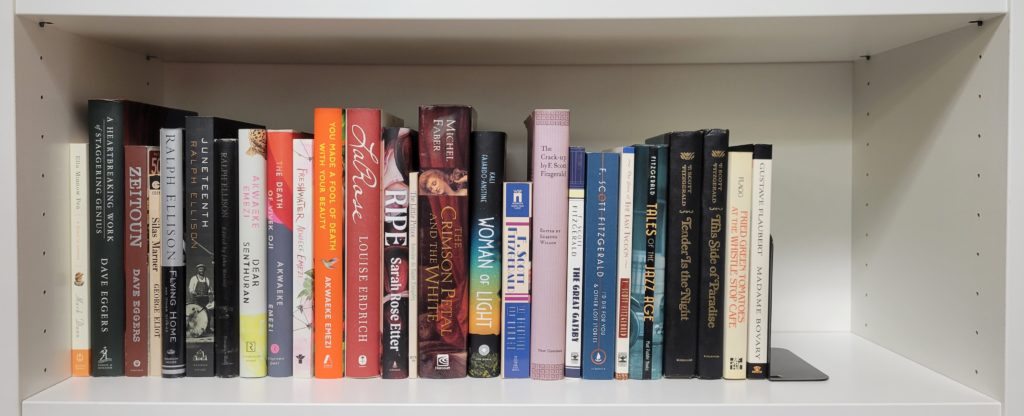
Now for shelf #11!
I plan to read Fried Green Tomatoes at the Whistle Stop Cafe because of the reviews and because it has a door on the cover! I like letting the reading challenges guide me because deciding what to read from this shelf would have been extremely difficult without them. It’s highly likely that I’ll get through all my fiction shelves before I finish the reading challenges. I’ll have to come up with a new plan once my shelf challenge is complete!
Books I’ve read:
Ella Minnow Pea by Mark Dunn
A Heartbreaking Work of Staggering Genius by Dave Eggers
Dear Senthuran by Akwaeke Emezi
The Death of Vivek Oji by Akwaeke Emezi
Freshwater by Akwaeke Emezi
You Made a Fool of Death with Your Beauty by Akwaeke Emezi
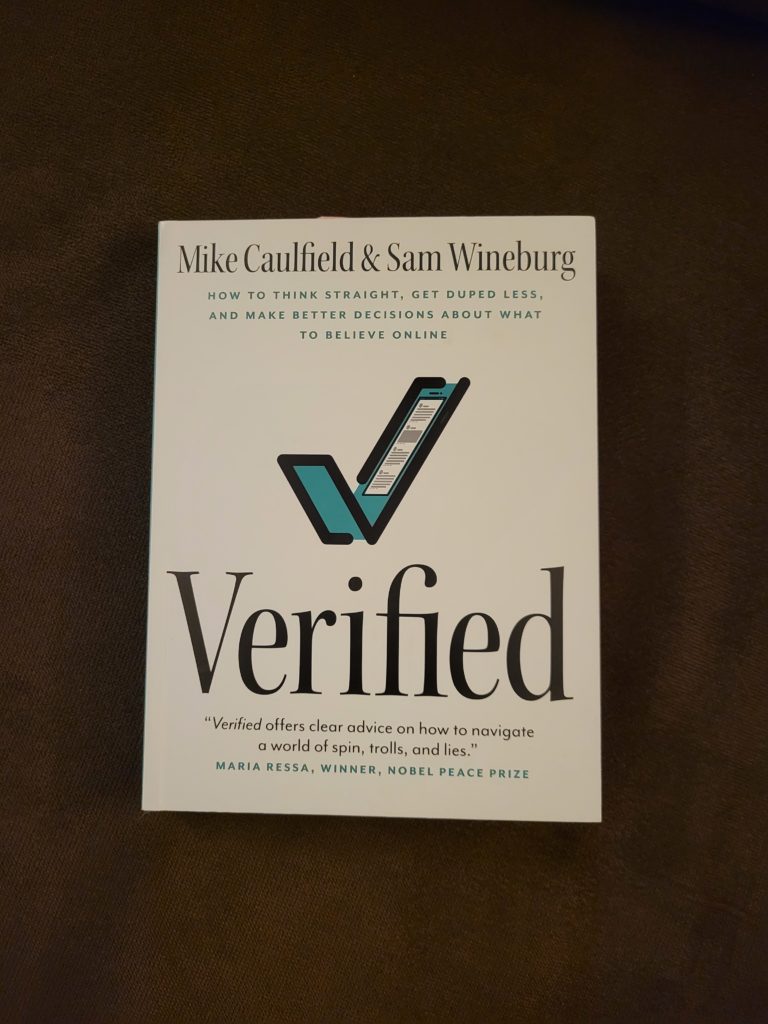
Today, I finished reading Verified: How to Think Straight, Get Duped Less, and Make Better Decisions about What to Believe Online by Mike Caulfield and Sam Wineburg for Nonfiction November’s “Web” prompt.
I consider myself a very savvy person when it comes to navigating information online. I’ve been teaching high school English for almost 24 years, and I have master’s degrees in Classroom Technology and Library and Information Science. I love teaching research skills, especially evaluating information for credibility and bias, mostly because I’ve seen so many people I care about get sucked into misinformation and easily debunked conspiracy theories. Because I know the information landscape is constantly changing, I do my best to keep up. When I saw that Mike Caulfield and Sam Wineburg were releasing a book, I knew I had to have it immediately, because I’ve used their work with my students and when preparing professional development for my colleagues.
I’m familiar with Caulfield’s SIFT method, and Verified provides many examples of how to use it in different contexts. As a longtime fan of the CRAAP test, I appreciated learning why checklists don’t hold up, and why the SIFT method is a faster and more reliable alternative. I may be most grateful for the chapter on Wikipedia because so many of my students and colleagues are not aware of how far it has come or what a valuable tool it can be. As I was reading, I kept marking pages with ideas that could be turned into activities for students (and possibly colleagues), and I see myself sitting with this book as I revise and update my research lessons. I learned a lot from the chapter on advertising because I found out that there’s so much I didn’t know about online advertising, especially native advertising. Caulfield and Wineburg also address AI in the postscript and explain how the SIFT method holds up in the face of AI generated disinformation.
This book is extremely accessible and would be valuable for anyone who wants to be smarter in how they approach the information they encounter online. For those of us who teach research, it’s a must read.