From the moment ChatGPT was released, I immediately tried to understand Large Language Models and how they would impact me as an educator. I was probably the first person in my school district to deliver professional development on AI, and I thought it was most important to focus on how it works and its possible implications for the classroom, including research, the credibility of online information, and student cheating/plagiarism. My stance has been, “This is fascinating technology, but maybe we should proceed with caution.”
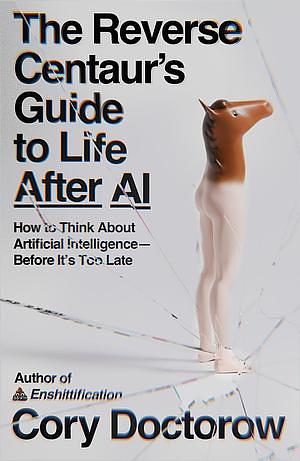
Trying to sort through the AI hype has been frustrating at times, so I’ve been reading as much as I can to make sure I have the information I need to make informed choices as an educator and consumer. The Reverse Centaur’s Guide to Life After AI: How to Think About Artificial Intelligence–Before It’s Too Late by Cory Doctorow is an extremely valuable addition to that reading list. What stands out most is how Doctorow explains complex concepts, such as the economics of the current AI bubble and the role copyright plays in LLM training and outputs, in a straightforward, easily comprehensible manner. He also dispels the “AI inevitableism” that has always frustrated me. One of the major themes running through this book is that AI tools are products made by companies that may or may not endure, especially if/when the AI bubble bursts, and that we have the power to influence the direction AI takes. Doctorow offers numerous examples of situations in which AI failed to live up to the hype, while acknowledging areas where AI is actually helpful and not necessarily damaging to the environment. The key, according to Doctorow, is ensuring that we are Centaurs, people who are assisted by AI, and that we retain our autonomy over when and how we use it as opposed to the “Reverse Centaur” who is an assistant to the machine. While I don’t agree with everything in this book (it will take a lot to convince me that AI therapy could ever be a good thing), I think Doctorow’s insight and explanations are extremely valuable, and I recommend this to anyone who wants to learn more about the issues surrounding AI.
Thank you to Libro.fm for an advance listening copy of the audiobook and to NetGalley for an ARC of the ebook. I have to say that I preferred the audiobook because Doctorow narrated it himself. His reading conveyed the tone in a way that did not come across in the printed text.